
-
 Boğaziçi University faculty member Prof. Dr. Rana Sanyal's contribution to the Phase 1 success of Türkiye's first original drug candidate to reach clinical trials.6 April 2026
 -
 Boğaziçi University Achieves Second Place in National Wrestling Championship2 April 2026
 -
 Century-Long Memory of Kandilli Observatory Is Digitized31 March 2026
 -
 Boğaziçi University Continues Its Upward Momentum27 March 2026
 -
 Boğaziçi University Faculty Members Achieve Success in MSCA-PF-202511 March 2026
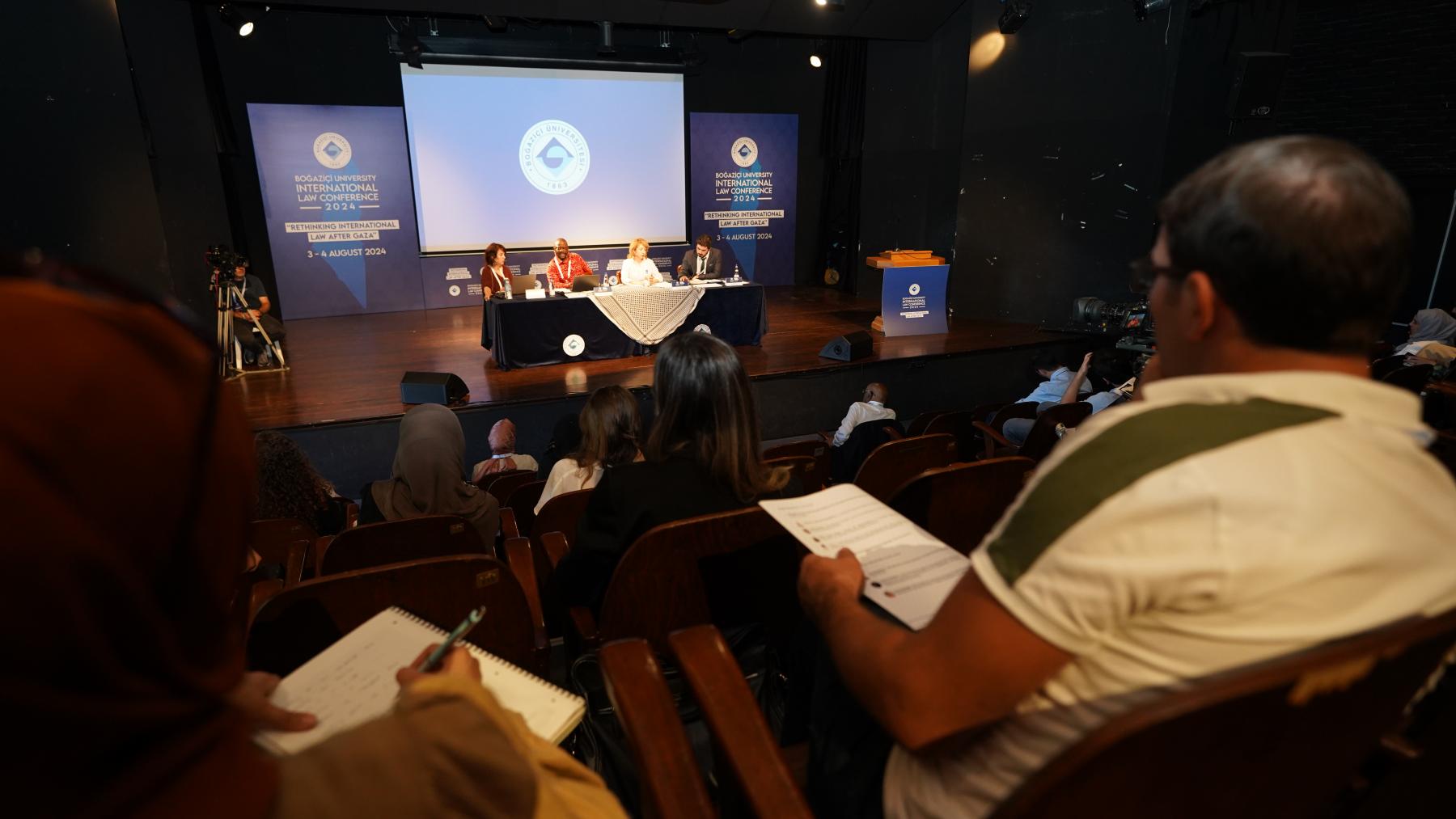
Rethinking International Law After Gaza Conference Held at Boğaziçi University on August 3-4
Boğaziçi University Faculty of Law, also known as the Boğaziçi Law School, organized the conference “Rethinking International Law After Gaza” on August 3-4. The conference brought together more than 100 lawyers from different countries to discuss the humanitarian crisis in Gaza and how it has been handled by international legal mechanisms.
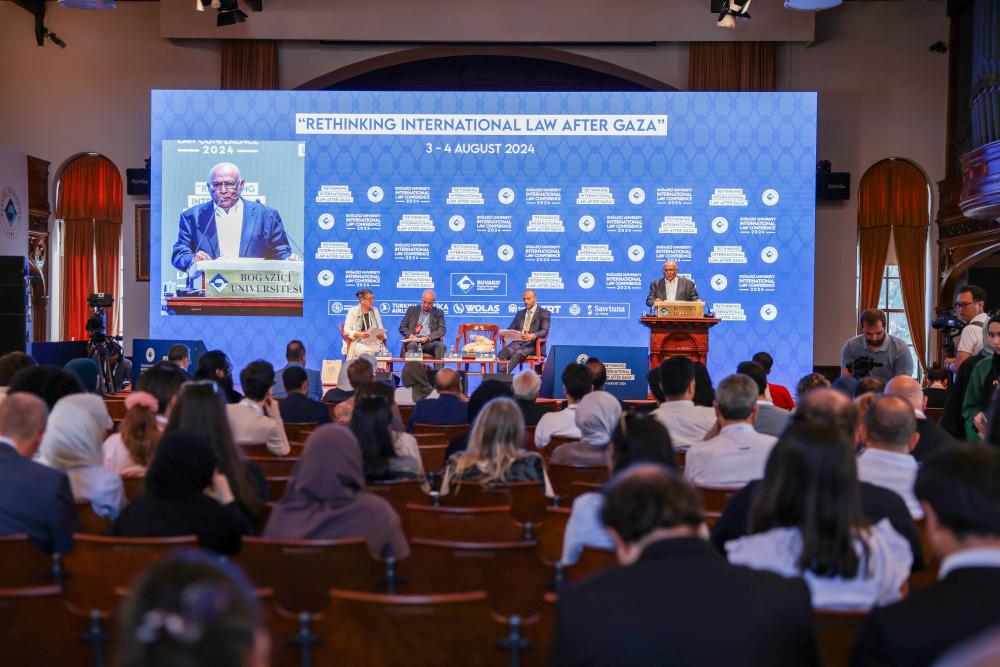
In the conference hosted by Boğaziçi University Faculty of Law, the universality, legitimacy, and role of international law in realizing justice were discussed with a critical approach. Former United Nations (UN) Special Rapporteurs on Palestine, Richard Falk and Michael Lynk, were among the speakers at the conference, which was attended by world-renowned academics.
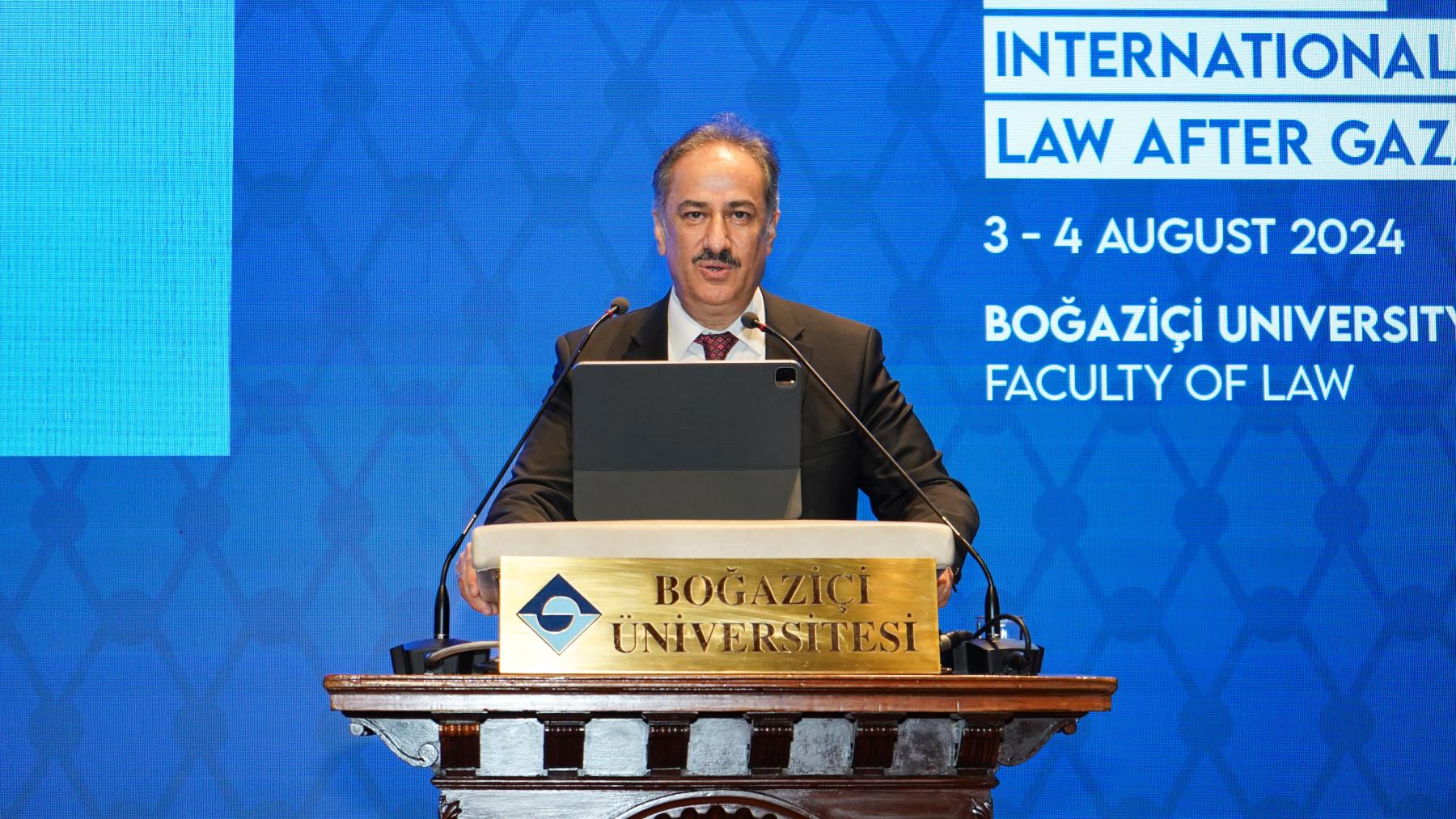
"IT IS AN HONOUR TO HOLD THIS CONFERENCE AT BOĞAZİÇİ"
Speaking at the opening of the conference, Boğaziçi University Rector, Prof. Dr. Mehmet Naci İnci, emphasized the importance of holding the conference at Boğaziçi University, stating, "It is an honour for Boğaziçi University to provide a platform where international law and human rights can be freely discussed, especially at a time when discussions on the Palestinian issue face various restrictions worldwide. This beautiful city of Istanbul, historically a meeting point of different cultures and ideas, remains an ideal setting for such a critical dialogue, and the Boğaziçi Law School is deeply committed to playing this role. We believe that the Boğaziçi Law School will become a vital platform for free speech and critical thinking, particularly in matters of global justice and human rights."
Regarding the purpose of the conference, Rector İnci said: "The Palestinian issue and the events in Gaza necessitate a comprehensive re-evaluation of the legitimacy and effectiveness of the international legal system. Another goal is to explore interpretations of international law from non-Western perspectives, which, I believe, are often marginalized in Eurocentric social sciences. By embracing diverse perspectives, we hope to initiate a critical dialogue and build knowledge in these areas."
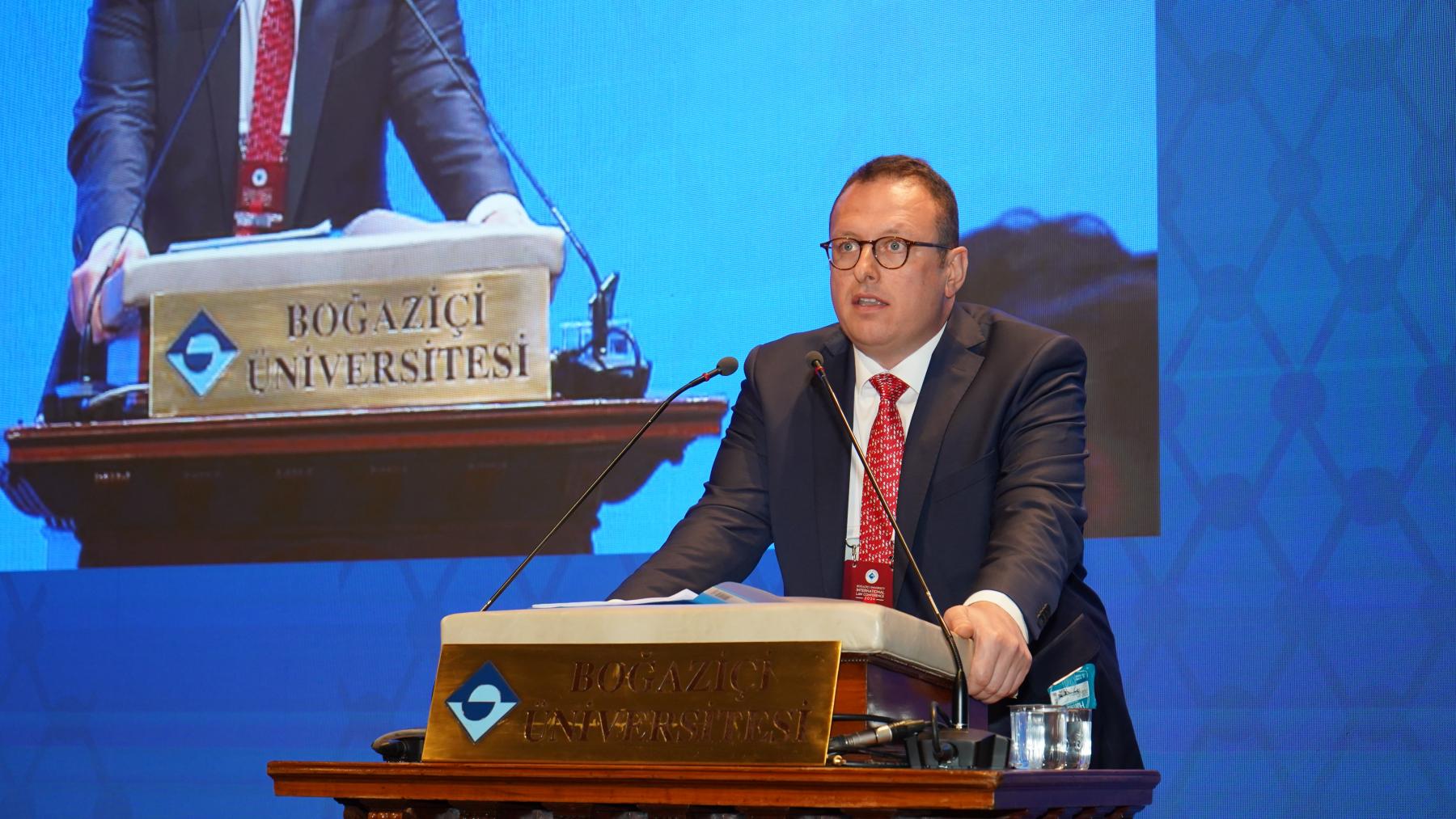
"THE CONFERENCE WITH THE MOST DISTINGUISHED PARTICIPATION ON THIS SUBJECT"
In his opening speech, Faculty of Law Vice Dean, Assoc. Prof. Ali Emrah Bozbayındır, stated that although it is the first international conference organized by the faculty, it would not be an exaggeration to say that it is the conference with the most distinguished participation on this subject in Turkey and in the world.
Emphasizing that Boğaziçi University Faculty of Law has a dynamic, interdisciplinary, international, and comparative approach, Assoc. Prof. Dr. Bozbayındır said:
"In keeping with the spirit of our faculty, which emphasizes international and comparative law, we are coming together to address one of the most pressing issues in contemporary international law. The theme "Rethinking International Law After Gaza" invites us to critically examine the current international legal order following Israel's invasion of Gaza."
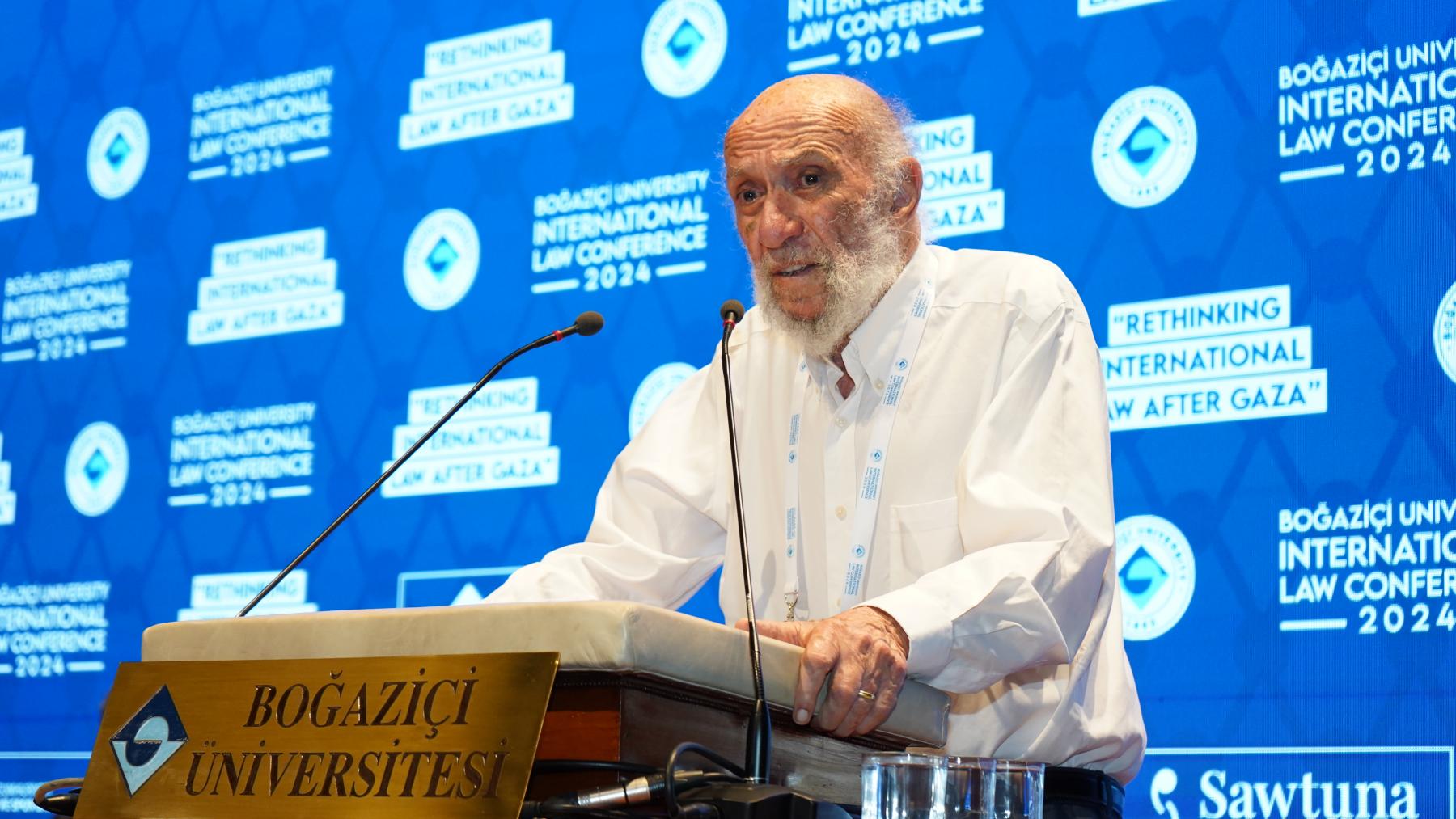
"INTERNATIONAL LAW FAILS TO DEAL EFFECTIVELY WITH THE CRISIS IN GAZA"
In his speech at the session, Prof. Richard Falk, an international law expert, former United Nations (UN) Human Rights Rapporteur, and political scientist at Princeton University, one of the most respected institutions of higher education in the US, strongly criticized Israel's actions in Gaza and underlined the failure of international law to effectively address the crisis in Gaza.
"The genocide continues, and the threat of a wider destructive war in the region directly linked to Gaza has become a growing concern," Falk said.
Falk criticized Israel's flagrant disregard for international resolutions and the global community's inability to enforce these laws, saying: "Israel flagrantly disregards authoritative resolutions to stop the genocide and end the occupation of Gaza, the West Bank, and East Jerusalem." He added, "The genocide is a continuation of apartheid in Palestine and is occurring in a postcolonial historical atmosphere."
Falk said that despite its shortcomings, international law remains important for legitimizing solidarity movements and educating future generations about justice and human rights.
"THE ISRAELI OCCUPATION IS COMPLETELY ILLEGITIMATE WITH THE ICJ DECISION"
Former United Nations (UN) Special Rapporteur on Palestine, Michael Lynk, one of the participants in the conference, in his statement to Anadolu Agency (AA), said that following the International Court of Justice (ICJ) ruling, the Israeli occupation is now officially illegitimate in its entirety.
Regarding the failure of the international community to stop Israel's attacks on Gaza, Lynk said:
"Let's be clear, we call it the international community, but in general, the Global South has sided with Palestine. They are few in number, they have no power at the international level. But within their power, they have raised, supported, and advanced the Palestinian cause. The main blockade comes from the Global North, from Europe, North America, Japan, Australia, and especially the United States."
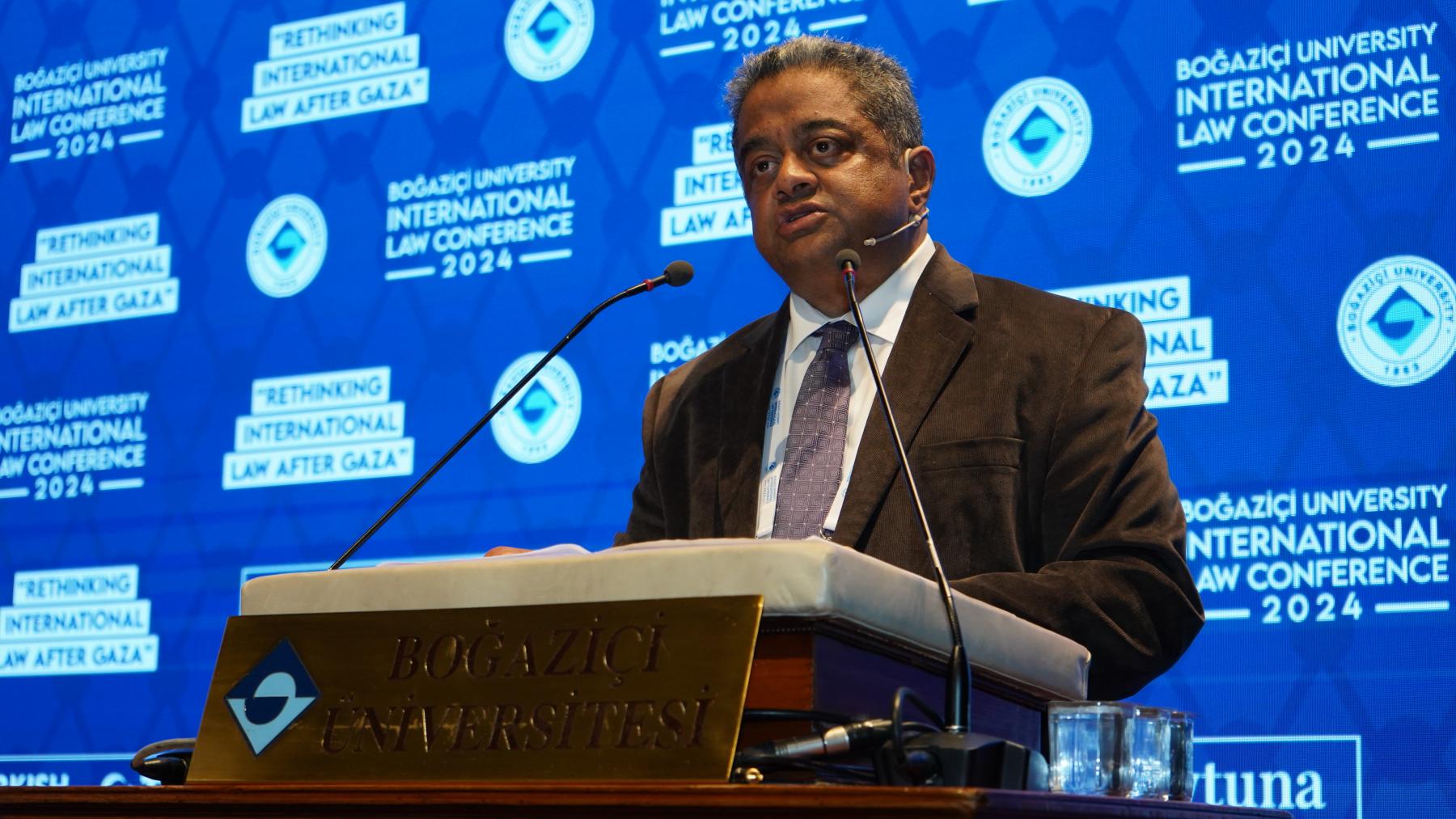
"THE RECONSTRUCTION OF GAZA COULD TAKE DECADES"
Balakrishnan Rajagopal, the United Nations (UN) Special Rapporteur on adequate housing, also emphasized in his speech the impact of the systematic destruction of housing in Gaza and other conflict zones. Defining domicide as the mass destruction of homes, Rajagopal argued that it should be recognized as a crime due to its profound impact on human dignity and community integrity. ‘The loss of a home is a profound loss that causes us to lose our humanity, Rajagopal said.
Commenting on the failure of international law to address the crisis in Gaza, Rajagopal said, "Israel is enjoying impunity, a violation of international law that has its own normative force. International law does not seem to be working in Gaza."